
Surface plasmon resonance (SPR) - related science and technology have recently spawned a brand new branch of research referred to as "Plasmonics"
Surface plasmon resonance (SPR) - related science and technology have recently spawned a brand new branch of research referred to as "Plasmonics"

Plasmonics, also known as nanoplasmonics, is the creation, detection, and manipulation of signals at optical frequencies at nanoscale scale metal-dielectric interactions. Following the trend of miniaturizing optical devices, plasmonics finds applications in sensing, imaging, optical communications, and bio-photonics.
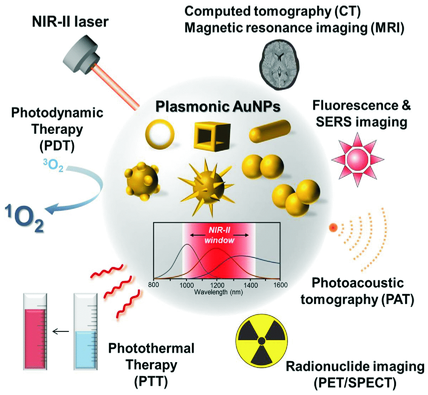
Surface Plasmon Resonance in Bioanalysis
For almost a decade, plasmonic imaging has been used to analyze single-cell activity. Although this approach is still in its early stages, its label-free and real-time benefits have piqued curiosity, and it has already been applied to extracellular and intracellular activities. However, as a freshly developed approach, plasmonic imaging has significant flaws that must be addressed before it can be widely used.
- First, plasmonic imaging’s imaging capacity needs to be improved. The spatial resolution of SPRM is severely limited in the direction of the plasmonic waves (forming interference fringes with lengths of several micrometers) due to the propagation of plasmonic waves on the sensing chips, which distorts single-cell plasmonic images and limits the application of SPRM to a subcellular structure. A big part of it is custom sensing chips with asymmetric dielectric arrangement around a gold thin film.
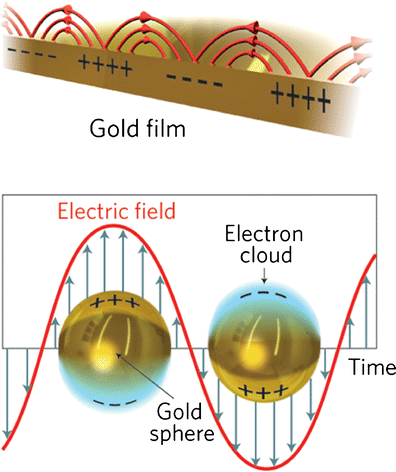
- Second, to increase the capabilities of plasmonic imaging, hyphenated approaches should be used. Plasmonic imaging’s label-free feature allows for non-invasive real-time observation of cellular activities, but it also makes it difficult to pinpoint the reason for a local RI change. As a result, plasmonic imaging is generally used in simple systems where the imaging results may be deduced from good experimental design.
- Third, there are few investigations on single-cell plasmonic imaging, particularly imaging of single bacterial cells. Many prominent topics in biomedicine, such as cancer, stem cells, and developmental biology, lack plasmonic imaging. Only a few papers on plasmonic imaging of bacterial cells have been published. One of the main reasons for this limited applicability is the technical barrier. Although Biosensing Instrument Inc. has released a commercial prism-based surface plasmon microscope (SPRm 200), laboratory research on objective-based SPRM and SLSPM is still ongoing.
Compound semiconductor nanowires
Plasmonic laser
Nanoscale plasmonic nanowire lasers have been extensively studied as coherent radiation at optical frequency, exhibiting distinctive properties, particularly in terms of operating beyond the traditional diffraction limit. II-VI semiconductor nanowires can be linked with a metallic nanostructure for plasmonic lasing oscillation thanks to their high optical gain.

Improving Devices with Plasmonics
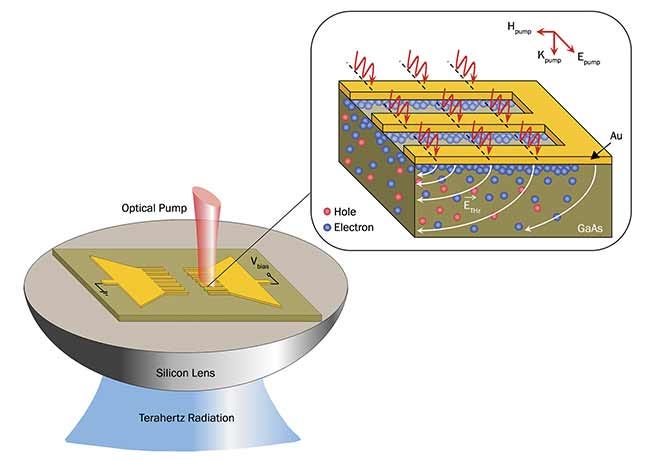
Researchers are putting electron oscillations, or plasmons, to work, clearing the way for food safety equipment and future mobile communications gadgets. Furthermore, plasmonic-enabled nanolasers could be used to connect chips or parts of chips, allowing computers to become quicker, smaller, and more efficient. Scientists and engineers, on the other hand, must first solve problems relating to nanomanufacturing, high optical intensities, and optical losses.
Plasmonics: Future and Challenges
Nowadays, plasmonics is a bright and mature area, aided by developments in nanofabrication, laser sources, and computer power, all of which have helped to keep discipline at the forefront. It has made a significant contribution to theoretical and experimental developments in photonics, condensed matter physics, and chemistry, as well as serving as a vital link between basic science and applications.
This takes us to the current great difficulties in this subject.
This takes us to the current great difficulties in this subject.
Plasmonics aims to manipulate light at the nanoscale with precision and low losses in the coming years. To accomplish so, we must push the localization of light to previously unimagined limits while maintaining its propagative nature. 2D natural hyperbolic materials and graphene are both excellent possibilities for achieving this goal. Success in this area will pave the way for a slew of novel atomic and molecular physics. Simultaneously, we should try to keep plasmon propagation robust for the creation of nanophotonic circuits, which will most likely be realized via improvements in topological plasmonics. To create such plasmonics circuits, significant advancements in nanofabrication would be required.
Finally, we will require theoretical models to characterize the nonlocal and nonlinear physics of such devices in order to stay up with these experimental developments. We will need to be concerned about the simultaneous quantization of matter and light in particular. All of these groundbreaking discoveries, taken together, pave the way for a better understanding of light-matter interactions.
Informative, great write up❤
ReplyDeleteAwesome💙
ReplyDelete